Preserving Cameroonian Heritage for Generations to Come

[SITE_NAME] is a community-owned archive where Bakoko, Batanga, Bassa, Douala, Ewondo, Fulfulde, Bamileke, Beti, and all other Cameroonian peoples document their histories, languages, oral traditions, and cultural practices. This is not a static museum collection—it is a living repository shaped by those who live this heritage every day.

If you hold proverbs your grandmother taught you, photographs from family albums, recordings of elders speaking your mother tongue, or stories about your village's founding—you have something this archive needs. Contribute today and ensure your heritage reaches grandchildren born overseas, researchers studying African linguistics, and future generations who will thank you for keeping it alive.

About This Archive

This archive began when a Dallas-based researcher with Bakoko and Batanga lineage realized that too much had already been lost. Family photographs sat deteriorating in boxes. Elders carrying centuries of oral knowledge passed without ever recording their stories. Language fluency declined among diaspora youth born far from the Littoral, Centre, and Grassfields regions where these cultures first flourished.

But loss does not have to be permanent. [SITE_NAME] is built on a different principle than the archives we inherited from colonial institutions. Those archives extracted heritage and stored it abroad, often without the communities' consent or participation. This archive belongs to the people whose heritage it holds.

Community Authority First

We do not curate from above. Communities determine what is sacred, what is public, what can be shared. Our editorial team facilitates; we do not gatekeep.

Cameroon-First Framing

Too many pan-African initiatives flatten Cameroon's extraordinary diversity into generic "African" categories. This archive treats Cameroon's plurality as a feature, not a problem.

Living Archive, Not Museum

Heritage is not something behind glass. It lives in daily practice—in the languages we speak at home, the ceremonies we perform, the recipes we teach our children.
Cameroon: A Crossroads Nation

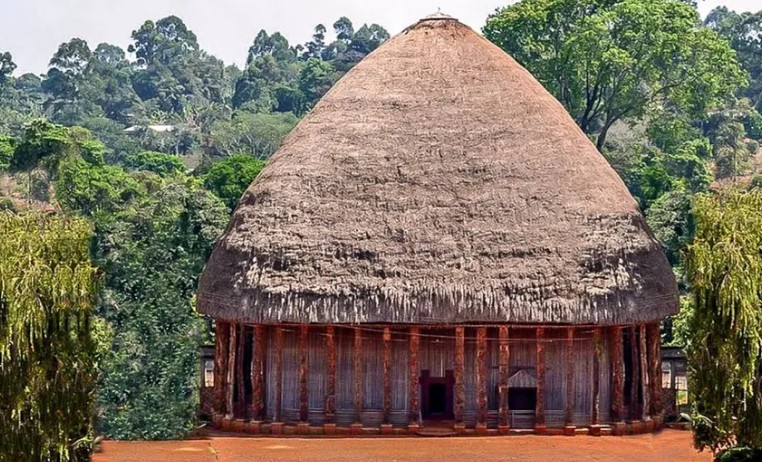
Sometimes called "Africa in miniature," Cameroon is better understood as a convergence point where multiple African worlds meet. To the north lies the Sahelian sphere—the Hausa trade routes, the Fulani emirates, Islamic scholarship, and pastoral economies. To the south and west stretches the forest belt—the Bantu-speaking peoples, matrilineal and patrilineal kinship systems, the Grassfields chiefdoms with their elaborate palace cultures. The Atlantic coast hosts the Sawa peoples—Douala, Bakoko, Batanga, Bakweri—who navigated transoceanic connections since before the arrival of European traders.

Add to this Cameroon's 280+ languages across five major linguistic families, its administrative split between French and British colonial legacies, and its population that codeswitches freely among French, English, Cameroonian Pidgin English, and indigenous tongues—and you have a nation whose cultural plurality cannot be collapsed into simpler categories.

This archive honors that complexity. It does not ask you to choose between being Bakoko or Cameroonian, Douala or African. You are both. All of it.

Featured Collections

Voices of the Wouri Estuary: Bakoko & Batanga Oral Histories

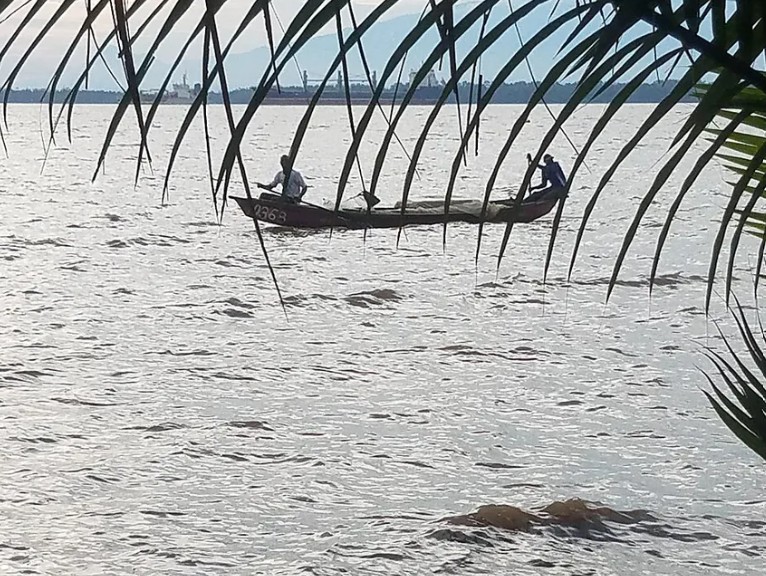
Recordings made between 2023 and 2026 from elders in Bonabéri, Deido, and Akwa communities. Contains life narratives spanning the late colonial period through independence, traditional fishing knowledge, place name etymologies, and a rare collection of Bakoko work songs recorded during pirogue fishing expeditions.

Explore the Collection

Grassfields Palace Chronicles: Bamum & Tikar Manuscripts

Digitized reproductions of royal chronicles, palm-leaf manuscripts, and palace records from Nkwen, Bafut, and the former Bamum kingdom. Features the Bamum script, genealogies of chiefs, and ritual protocols. All submissions verified by current palace authorities.

Explore the Collection

The Mvet Epic: Beti Performances in Full Context

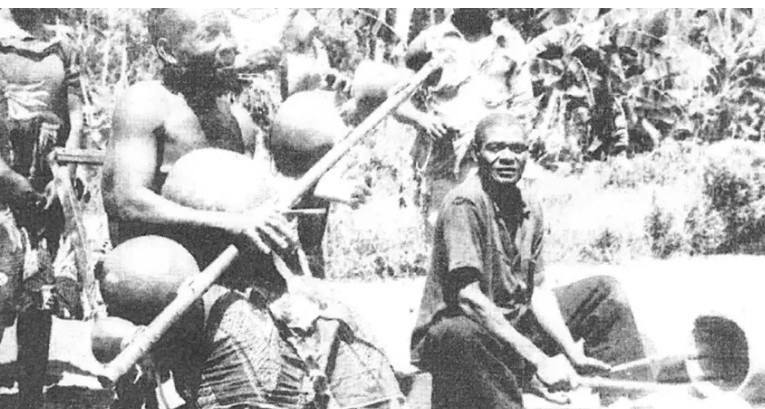
Complete mvet harp performances recorded during funeral vigils and festival celebrations in the Centre and South Regions. Each performance includes biographical notes on the mvettist, the occasion's context, and interlinear transcriptions.

Explore the Collection

A Glimpse: Bakoko Language Heritage

The Bakoko language (ISO 639-3: bkh) belongs to the Basaa-Bakoko subgroup of the Bantu family. Below is a sample of kinship terms illustrating the relational depth of Bakoko social structure.

Bakoko Phonetic (IPA) English French
nyam father pĂšre
mana mother mĂšre
wundu child enfant
mba elder (respectful) aßné(e)
na younger sibling cadet(te)
ndya older sibling aßné(e)
tombé paternal uncle oncle paternel
jemba maternal uncle oncle maternel

Screen reader note: Note: The distinction between paternal uncle (tombé) and maternal uncle (jemba) reflects the different social obligations attached to paternal vs. maternal kin in Bakoko culture.

— Source: Bakoko community contributor, Wouri Department, Littoral Region

Your Heritage Belongs Here

Whether you grew up in Douala, YaoundĂ©, Buea, Maroua—or in Houston, Paris, Montreal, London—this archive is yours. Share what you know. Help preserve what remains. And reach for what was already lost, through the memories of those who still carry it.

Start Contributing Today